Perubahan Ketentuan Persetujuan Tergugat Dalam E-Court : Progresif atau Regresif?
Abstract
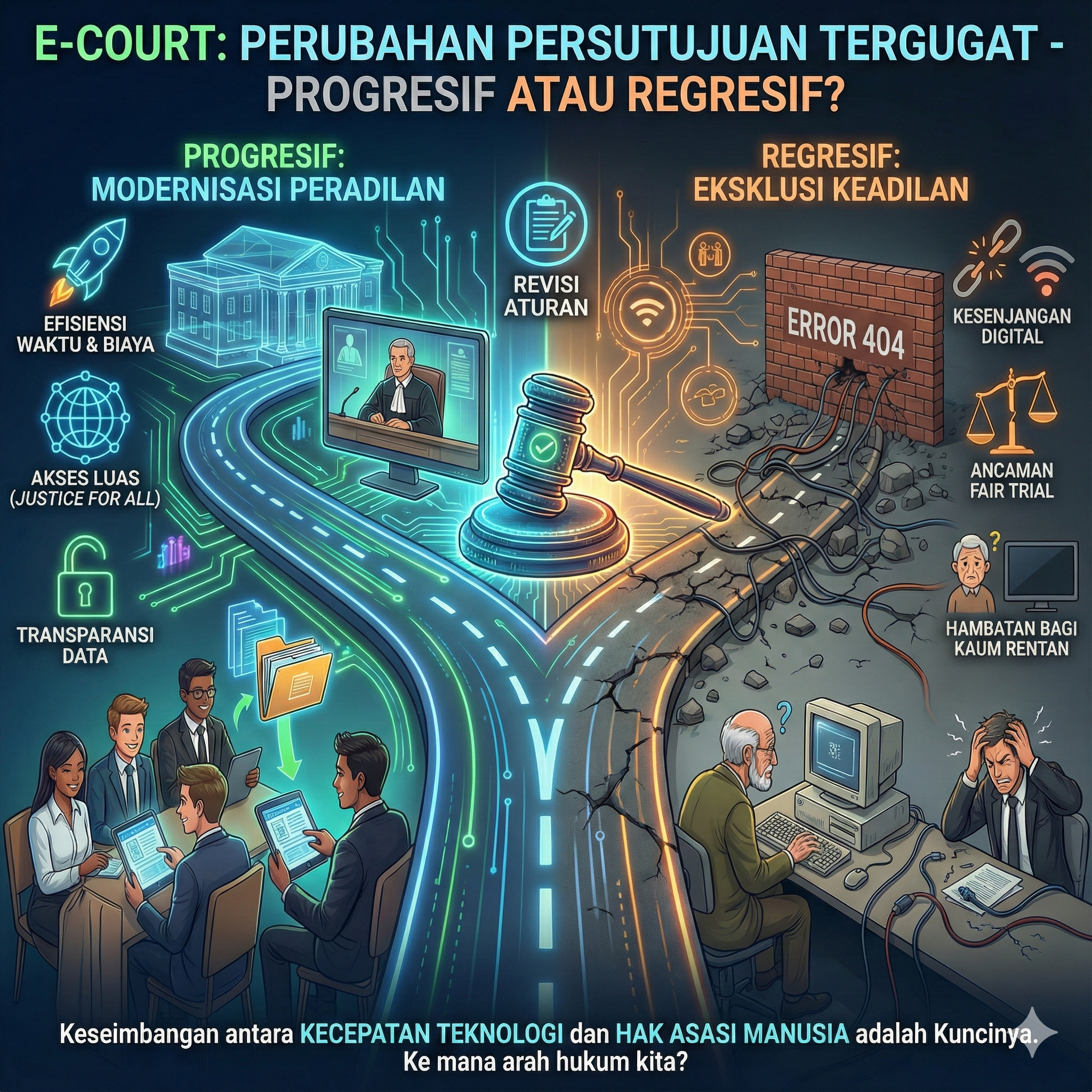
The rapid development of technology requires the legal system to adapt, including the implementation of E-Court (electronic court) regulated by Perma Number 7 of 2022. The main goal of E-Court is to create a judicial process that is faster, more efficient, and cost-effective. However, the significant changes outlined in Perma Number 7 of 2022, particularly the removal of the requirement for the defendant's consent in the implementation of E-Court, raises concerns about the sustainability of progressive legal principles. While this change may accelerate the judicial process, it risks overlooking the rights of defendants who face limitations in access to technology. Therefore, this research aims to analyze the changes in the defendant's consent requirement in E-Court from the perspective of progressive law. The research method used is normative legal research, with an approach to statutory regulations and conceptual approach. The research findings indicate that although this regulation aims to create a more efficient judicial process, there is a risk of unequal access that must be considered, especially for defendants who lack adequate digital literacy. As a recommendation, it is suggested to implement a hybrid trial model, which combines both online and offline hearings, to maintain a balance between efficiency and fairness for all parties involved


1.png)





.png)

.png)