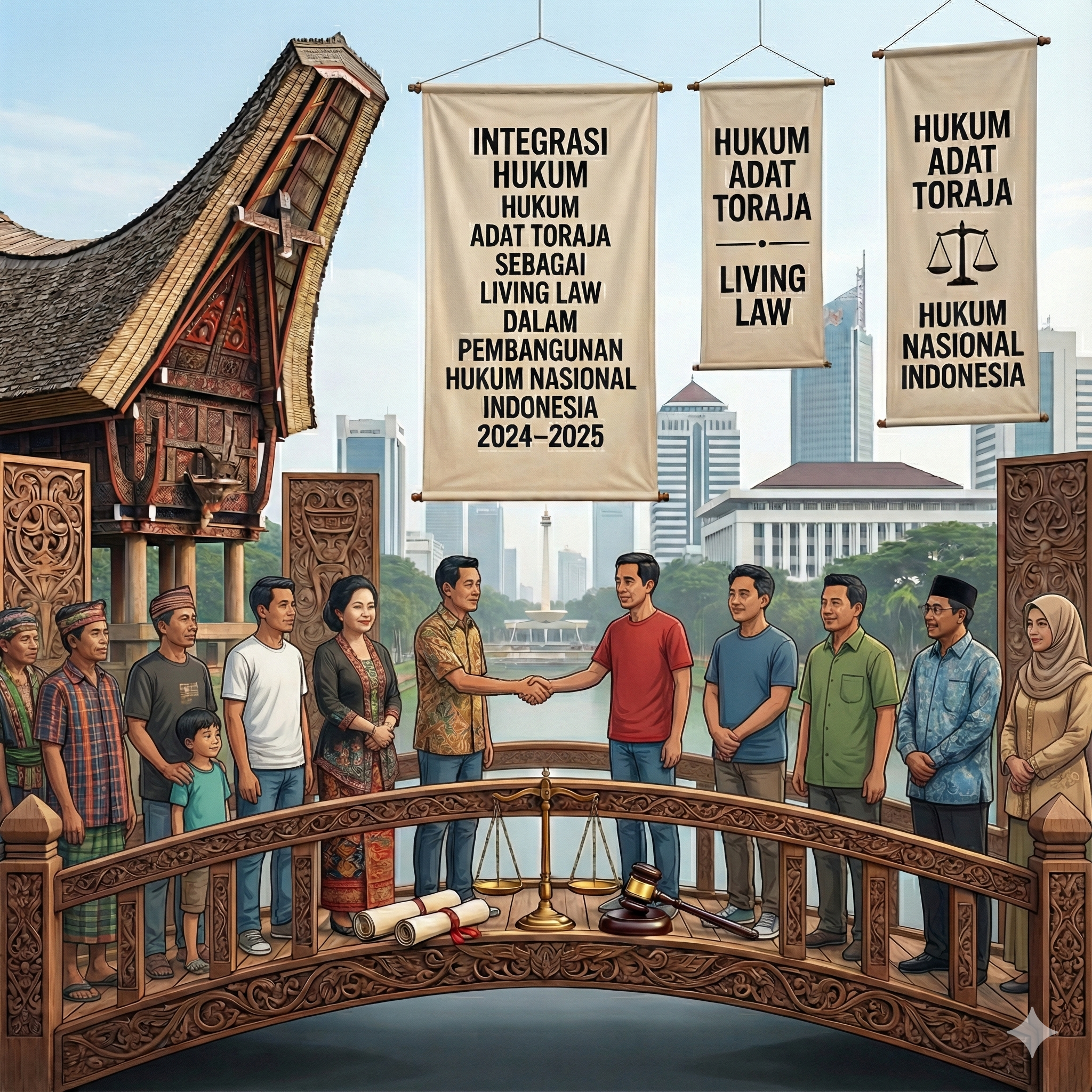
Integrasi Hukum Adat Toraja sebagai Living Law dalam Pembangunan Hukum Nasional Indonesia Tahun 2024–2025
Abstract
This study examines the integration of Toraja customary law as a living law into the development of Indonesia’s national legal system in the period 2024–2025, with a focus on the regulation of indigenous peoples and ulayat (communal) land rights and their implications for the protection of the rights and living spaces of indigenous communities. Using a normative legal approach through the analysis of the Constitution, agrarian regulations, policies on the registration of ulayat land, regional regulations, and relevant literature, the research shows that such integration can strengthen legal certainty and the bargaining position of Toraja indigenous communities, particularly through the recognition of ulayat rights and the strengthening of customary institutions. However, the study also finds a risk of formalization that reduces the communal character of land and tongkonan, shifts decision-making power to the bureaucracy, and generates new conflicts when the logic of state law is not aligned with customary values and social structures. Therefore, integration will only produce substantive justice if it is designed in a participatory manner, recognizes the authority of customary decisions, and positions Toraja indigenous communities as the primary subjects in governing their own living spaces


1.png)




.png)

.png)